Showing posts with label Israel. Show all posts

Sunday, 22 August 2010

Israel and Palestinians agree to direct peace talks

We are enjoy Israel and Palestinians agree to direct peace talks

Israel and the Palestinians have accepted an invitation by the United States and other powers to restart direct talks on September 2 in a modest step toward forging a deal within 12 months to create a Palestinian state and peacefully end one of the world's most intractable conflicts.

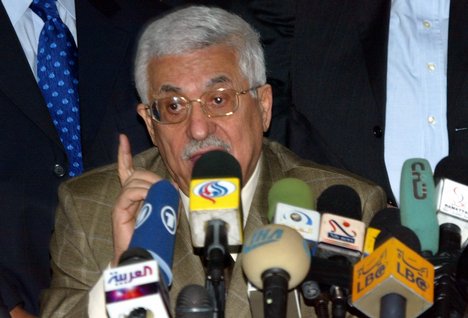
U.S. Secretary of State Hillary Clinton said Israeli Prime Minister Benjamin Netanyahu and Palestinian President Mahmoud Abbas will meet with President Barack Obama on September 1, before formally resuming direct negotiations the following day at the State Department in Washington.

Related articles
Washington to host Middle East peace talks next month
Search the news archive for more stories
"There have been difficulties in the past, there will be difficulties ahead," Clinton said in a statement.

Clinton added that Egyptian President Hosni Mubarak and Jordan's King Abdullah also were invited to the talks, which will mark the first direct negotiations between Israel and the Palestinians in 20 months.

"I ask the parties to persevere, to keep moving forward even through difficult times and to continue working to achieve a just and lasting peace in the region," Clinton said.

Clinton's announcement was echoed by the Quartet of Mideast peace mediators -- the United States, Russia, the European Union and the United Nations -- which issued its own invitation to the talks and underscored that a deal could be reached within a year.

Netanyahu quickly accepted the U.S. invitation and said reaching a deal would be possible but difficult.

"We are coming to the talks with a genuine desire to reach a peace agreement between the two peoples that will protect Israel's national security interests, foremost of which is security," a statement from his office said.

After a meeting in the West Bank city of Ramallah, the Palestinian leadership announced its acceptance of the invitation for face-to-face peace talks with Israel.

But Saeb Erekat, the chief Palestinian negotiator, warned that the Palestinians would pull out of the new talks if the Israelis allow a return to settlement building on lands that the Palestinians seek for a future state.

Israel's 10-month moratorium on Jewish settlement building in the occupied West Bank is due to end on September 26.

The invitation to the talks "contains the elements needed to provide for a peace agreement," Palestinian leaders said.

"It can be done in less than a year," Erekat said. "The most important thing now is to see to it that the Israeli government refrains from settlement activities, incursions, fait accomplis policies."

The two sides are coming together for talks after decades of hostility, mutual suspicion and a string of failed peace efforts.

The Quartet statement was aimed at the Palestinians, who believe that the group's repeated calls for Israel to stop building settlements in the West Bank and accept a Palestinian state within the borders of land occupied since the 1967 Middle East war are a guarantee of the parameters for the talks.

Clinton's invitation was aimed at Netanyahu, agreeing with his demand that the talks should take place "without preconditions" and giving little sense of any terms that the Israeli leader fears could box him in.
Coppied by http://www.independent.co.uk/news/world/middle-east/israel-and-palestinians-agree-to-direct-peace-talks-2058419.html

Saturday, 21 August 2010

Lebanese army, Hezbollah appear closer after Israel clash

We are enjoy Lebanese army, Hezbollah appear closer after Israel clash

A Lebanese flag and wreaths at the spot where two Lebanese soldiers died in a firefight over tree cutting.

Beirut, Lebanon (CNN) -- The Lebanon mission to the U.N. has told CNN in a written statement that the Israeli Military "ignored a request by the LAF (Lebanese Armed Forces) and UNIFIL (United Nations Interim Force in Lebanon) to postpone cutting down trees in a contested area along the "Blue line", the U.N. border line demarcating Israel and Lebanon.
The statement goes on to say: "The LAF fired warning shots asking Israeli soldiers to desist from their activities. However, the Israeli response came in the form of heavy gunfire and mortar shelling of three Lebanese villages killing one journalist and two Lebanese soldiers in addition to wounding six soldiers."
While Lebanon acknowledges Israel made proper notification of its tree cutting plans through proper U.N. channels -- by advising UNIFIL the work would commence -- the statement says the Lebanese Army was only informed of the plans 15 minutes before the work actually began and slams Israel for not "respecting" the "tripartite coordination" by preventing the Lebanese from requesting a delay on the work in the disputed area.
The document provides details about the firefight. The Lebanese mission says that 10 soldiers were immediately dispatched after hearing the IDF would begin work within minutes "to protect its sovereign borders from any Israeli infringement." It was presumably these soldiers who fired the "warning shots."
A heavy and prolonged firefight on August 3 cost lives on both sides: three Lebanese and an Israeli officer were killed in the skirmish.
Israel has consistently maintained that it bears no responsibility for the deadly border fighting and that its soldiers were operating on sovereign Israeli territory -- a claim backed up by the U.N. who confirmed that Israel did not cross the Blue Line into Lebanese territory.
While both sides have pledged to work closely with UNIFIL to prevent another outbreak of violence the Lebanese statement comes after questions were raised in Washington about U.S. funding of the Lebanese Army.
The border clash and resulting diplomatic saber rattling have lead some U.S. politicians to question the wisdom of arming a military that has been engaged in fighting with the United State's closest regional ally. Thus what has been a regional policy issue has been thrust into the Washington "beltway" of domestic politics. Earlier this month members of the House of Representatives put a hold on funding for the Lebanese military.
U.S. military aid to Lebanon has served a number of foreign policy objectives.
Arming the Lebanese military has been seen as a way of offsetting the heavily armed Hezbollah militia in the south and also allowing the government in Beirut to stand-up to the threat of Sunni insurgents operating in Palestinian refugee camps.
In a deadly three-month long conflict in the summer of 2007 the Lebanese army defeated insurgents in the Nahr al-Bared refugee camp. Fatah al-Islam, the main group fighting the army from inside the camp has been accused of having past links to al Qaeda and Syria.
Coppied by http://edition.cnn.com/2010/WORLD/meast/08/20/mideast.peace.analysis/index.html?hpt=C2#fbid=BRhT0Nxv594&wom=false

Monday, 16 August 2010

we are know this Israel gives Obama reason to worry

enjoy Israel gives Obama reason to worry
WASHINGTON - Pro-Israeli journalist Jeffrey Goldberg's article in The Atlantic magazine [1] was evidently aimed at showing why the Barack Obama administration should worry that it risks an attack by the government of Prime Minister Benjamin Netanyahu on Iran in the coming months unless Washington takes a much more menacing line toward Iran's nuclear program.

But the article provides new evidence that senior figures in the Israeli intelligence and military leadership oppose such a strike against Iran and believe that Netanyahu's apocalyptic rhetoric about Iran as an "existential threat" is unnecessary and self-defeating.

Although not reported by Goldberg, Israeli military and intelligence figures began to express their opposition to such rhetoric on Iran

in the early 1990s, and Netanyahu acted to end such talk when he became prime minister in 1996.

The Goldberg article also reveals extreme Israeli sensitivity to any move by Obama to publicly demand that Israel desist from such a strike, reflecting the reality that the Israeli government could not go ahead with any strike without being assured of US direct involvement in the war with Iran.

Goldberg argues that a likely scenario some months in the future is that Israeli officials will call their US counterparts to inform them that Israeli planes are already on their way to bomb Iranian nuclear sites.

The Israelis would explain that they had "no choice", he writes, because "a nuclear Iran poses the gravest threat since [Adolf] Hitler to the physical survival of the Jewish people".

He claims the "consensus" among present and past Israeli leaders is that the chances are better than 50/50 that Israel "will launch a strike by next July", based on interviews with 40 such Israeli decision-makers.

Goldberg is best known for hewing to the neo-conservative line in his reporting on Iraq, particularly in his insistence that that Saddam Hussein had extensive ties with al-Qaeda.

Goldberg quotes an Israeli official familiar with Netanyahu's thinking as saying, "In World War II, the Jews had no power to stop Hitler from annihilating us. Six million were slaughtered. Today, six million Jews live in Israel, and someone is threatening them with annihilation."

In his interview with Goldberg for this article, however, Netanyahu does not argue that Iran might use nuclear weapons against Israel. Instead, he argues that Hezbollah in Lebanon and Hamas in Gaza would be able to "fire rockets and engage in other terror activities while enjoying a nuclear umbrella".

But Israel relies on conventional forces - not nuclear deterrence - against Hezbollah and Hamas, making that argument entirely specious.
Coppied by http://www.atimes.com/atimes/Middle_East/LH17Ak02.html